
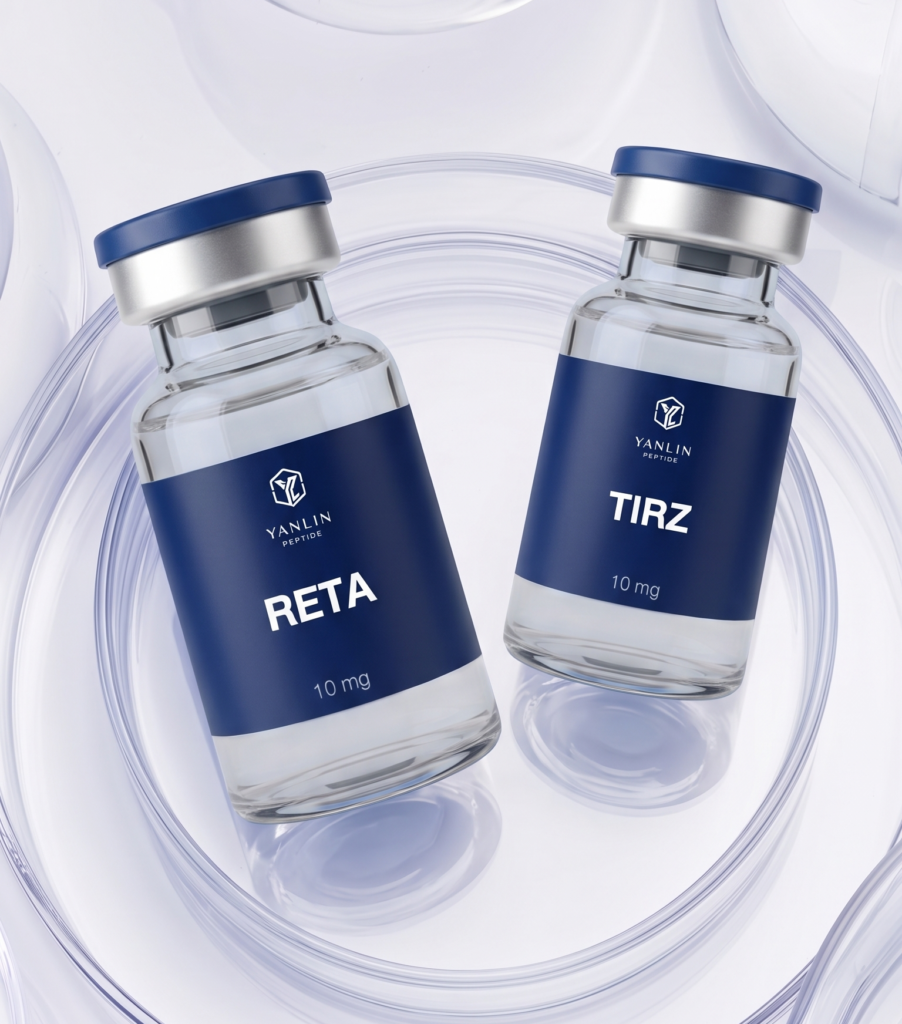
Retatrutide vs Tirzepatide is a popular point of contrast in metabolic research because both names refer to incretin-based peptide investigations, but their receptor characteristics differ. Tirzepatide is a dual agonist that targets GIP and GLP-1 receptors, whereas retatrutide targets GIP, GLP-1, and glucagon receptors. That extra glucagon receptor target alters how retatrutid is positioned in research discussions, explaining why the comparison is more than just two identical peptide names. For readers looking into metabolic research peptides, the main point
is understanding how receptor activity separates the two.
The comparison begins with the incretin pathway, which has become crucial to much contemporary metabolic research. GIP and GLP-1 are both involved in glucose signaling, insulin response, and appetite-related pathways, which is why they are frequently used in research on obesity and type 2 diabetes. Tirzepatide peptide is labeled by the FDA as a GIP receptor and GLP-1 receptor agonist, indicating that it activates both receptors. This dual receptor profile is the cornerstone of tirzepatide’s role in metabolic research and explains why it is often cited as the reference point when newer multi-receptor peptides are discussed.

The main distinction between Retatrutide vs Tirzepatide is that Retatrutide peptide is a triple agonist that targets GIP, GLP-1, and glucagon receptors, whereas Tirzepatide peptide is discussed for its dual GIP and GLP-1 receptor activity. While Tirzepatide peptide is explored for its dual GIP and GLP-1 receptor action, Retatrutide peptide is studied as a triple agonist for GIP, GLP-1, and glucagon receptors. This is the primary differential between Retatrutide and Tirzepatide, as the comparison is more than just two peptides in the same metabolic research
category. Both are used in incretin-based research, but retatrutide introduces glucagon receptor activity into the paradigm, altering how its role is examined among metabolic research peptides.
The comparison narrows to the glucagon receptor component. Tirzepatide’s dual profile focuses on GIP and GLP-1 receptor agonism, whilst retatrutide adds glucagon receptor agonism to the same larger metabolic framework. Since glucagon signaling is associated with hepatic metabolism, glucose control, and energy expenditure, its inclusion alters the research question surrounding retatrutide. This does not indicate that retatrutide is merely a stronger form of
trispeptide. It becomes part of a broader discussion on dual and triple agonist peptides, where the number and kind of receptor targets influence how each chemical is investigated.
A simple method to understand Retatrutide vs Tirzepatide is to separate common categories and receptor designs. Both names appear in discussions about metabolic research peptides and are linked to pathways involved in body weight and glucose research. The distinction is that tirzepatide uses a dual-receptor model, whereas retatrutide employs a triple-receptor model. That distinction is important because multi-receptor peptide research is more than just adding
extra targets. It is about determining whether different receptor combinations cause distinct metabolic processes in controlled circumstances.
Tirzepatide peptide’s
dual agonist profile is already associated with a well-established regulatory and clinical setting. Tirzepatide is the active ingredient in FDA-approved drugs like
Mounjaro for type 2 diabetes and Zepbound for chronic weight control. The FDA label describes it as a GIP and GLP-1 receptor agonist. That does not imply that this article is about medicinal use, but the approval status helps explain why tirzepatide is frequently used as a reference point in metabolic peptide discussions. It has a well-defined receptor profile, an established label, and a long history of clinical study.


Retatrutide
is unique in that it is still being studied while gaining popularity due to trial data and
its triple-receptor architecture. The Phase 2 obesity experiment found significant body-weight reductions in obese persons over 48 weeks, making Retatrutide peptide a hot topic in metabolic research talks. Its profile is also being investigated beyond weight-related outcomes, with studies focusing on metabolic dysfunction-associated steatotic liver disease. These research areas explain why retatrutide is frequently addressed, but they also demonstrate why it should be positioned as investigational research rather than an approved alternative to tirzepatide.
The term dual and triple agonist peptides is important because it directs the comparison to mechanism rather than hype. A dual agonist does not necessarily imply limitation, while a triple agonist does not always imply superiority. The receptor profile basically identifies which biological pathways are being addressed in the research strategy. Tirzepatide activates GIP and GLP-1 receptors, whereas retatrutide stimulates GIP, GLP-1, and glucagon receptors. This distinction offers each peptide its unique study identity within the larger incretin-based area.
This receptor-profile distinction also contributes to why Retatrutide vs Tirzepatide should not be portrayed as a direct replacement narrative. Tirzepatide has already received regulatory approval for particular medical applications, whilst retatrutide is still undergoing clinical trials. The analogy is valid because both are related to metabolic peptide research, however the development stage differs. For a product-education article, this distinction maintains the discussion truthfully while not converting it into advice or a claim about which one should be utilized.
Another reason the comparison is important is that metabolic peptide research has evolved from a single-pathway approach to multi-receptor design. GLP-1 receptor agonists drew significant attention to incretin-based research; tirzepatide widened the topic by activating both GIP and GLP-1 receptors; and retatrutide added another layer by activating glucagon receptors. That is why metabolic research peptides are increasingly being explored in terms of receptor combinations. The emphasis is no longer on the peptide name, but on how its receptor targets
influence the study situation.
The receptor profile influences how research findings are understood. If two peptides act on different receptor combinations, the outcomes cannot be comprehended solely by comparing headline results. The data’s interpretation is influenced by study design, dose selection, participant profile, outcomes, and receptor activation. This is why comparing Retatrutide vs Tirzepatide is most relevant when discussed first in terms of mechanism. The comparison
becomes evident when tirzepatide is viewed as the dual agonist model and retatrutide as the triple agonist model.

Retatrutide has attracted attention because of its triple-receptor profile, which distinguishes it from approved dual-agonist models already used in metabolic therapy. Since Retatrutide peptide is still under investigation, its research environment should be maintained separate from products with approved medicinal purposes. This distinction is important because public debate of emerging metabolic peptides can sometimes outpace the regulatory and clinical
evidence supporting them. In the topic of Retatrutide vs Tirzepatide, the more important comparison is not availability or personal use, but rather how each peptide is positioned in research based on its receptor targets.
The most practical method to compare Tirzepatide peptide and Retatrutide peptides is to begin with the receptors implicated. Tirzepatide is classified as a dual agonist because it acts on both GIP and GLP-1 receptors. Retatrutide is classified as a triple agonist since it acts on GIP, GLP-1, and glucagon receptors. Both are included in the larger debate of dual and triple agonist peptides, but the addition of a glucagon receptor target distinguishes retatrutide from other metabolic research peptides.
The primary distinction between Retatrutide vs Tirzepatide is that their names are frequently used to refer to the same metabolic research conversation, not because their profiles are identical. The Tirzepatide peptide represents the dual GIP and GLP-1 receptor model, whereas the Retatrutide peptide reflects the triple GIP, GLP-1, and glucagon receptor model. Understanding this distinction makes the comparison more informative since it explains why retatrutide is gaining attention as a novel research peptide while tirzepatide remains the established dual-agonist reference point. The receptor profile distinguishes the two, and it is the simplest explanation for why both names exist together in recent metabolic peptide discussions.
