
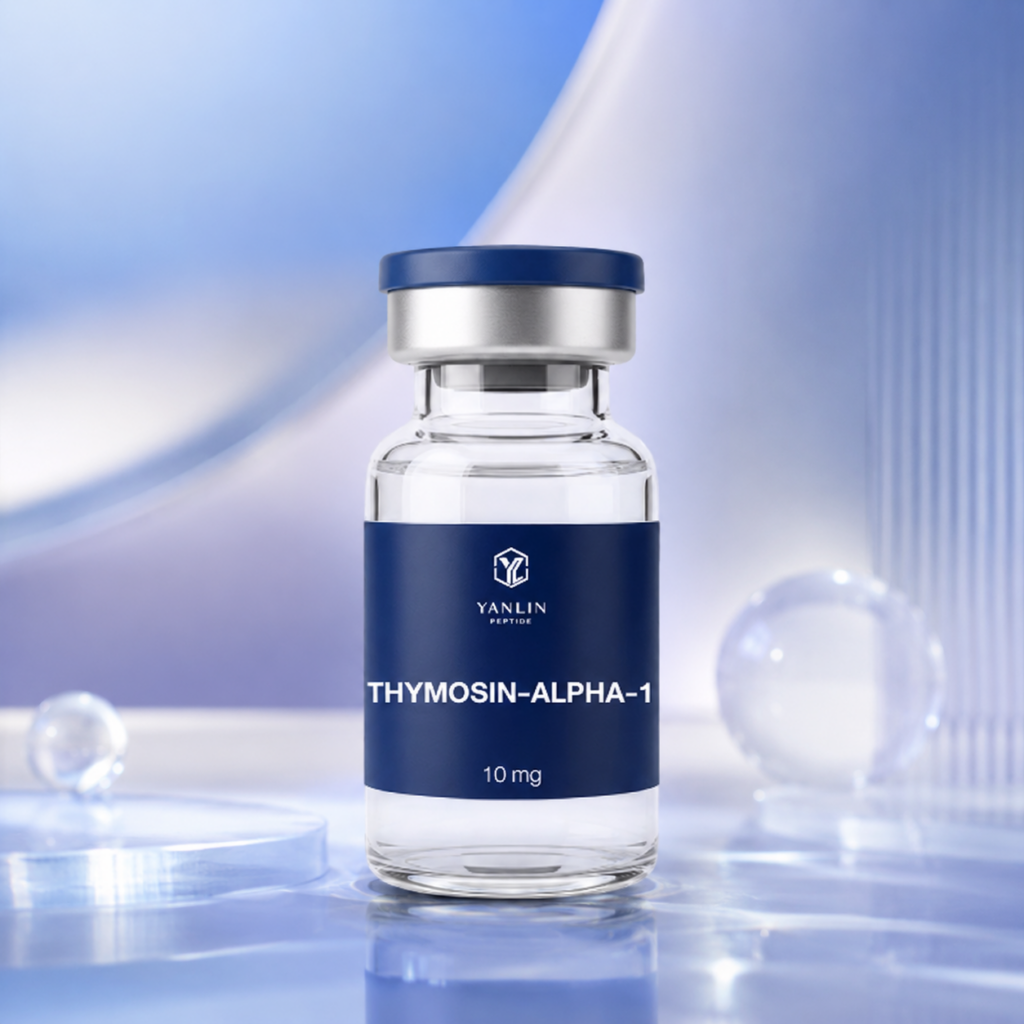
Thymosin Alpha-1 peptide arises in immune-related research because it has long been investigated in relation to immune regulation, namely how immune cells behave, interact, and adjust to changing conditions. Unlike peptides, which are mostly studied in terms of tissue repair, growth hormone routes, or production concerns, Thymosin Alpha-1 is more closely associated with immunology. Its research has focused on T cells, dendritic cells, innate immunological signaling, adaptive immune response, and inflammatory balance. This makes it an appropriate single-product topic because the peptide study context is precise enough to convey properly without turning the page into a comprehensive overview of all immune research peptides.
The origins of Thymosin Alpha-1 peptide explains why it is frequently associated with immunological investigations. Thymosin Alpha-1 is a 28-amino-acid peptide that was first isolated from thymic tissue. The thymus is closely linked to T-cell growth and immunological control. Because of this background, Thymosin Alpha-1 research has frequently focused on how the peptide interacts with immune function in a variety of models. According to reviews, it has immunomodulatory effects and has been shown to activate both innate and adaptive immune responses. This distinguishes its research stance from other peptide categories, as the debate begins with immunological coordination rather than general peptide function.
Thymosin Alpha-1 peptide is associated with T-cell activity, which is one of the primary reasons it arises in immune-related research. T cells are essential for adaptive immunity, and the thymus plays an important role in their formation and maturation. Thymosin Alpha-1 has been studied for its role in T-cell activity, cytokine signaling, and immune response coordination. In this peptide study context, the peptide is not typically discussed as working via a single separate mechanism. Its importance stems from how it fits into broader immunological communication, in which multiple cell types and signaling mechanisms interact.

Dendritic cells are another crucial component of Thymosin Alpha-1 research. These cells, which process signals and support T-cell responses, contribute to bridge innate and adaptive immunity. Thymosin Alpha-1 has been shown in published research to increase functional maturation and interleukin-12 production in fungus-pulsed dendritic cells, which explains why the peptide appears in studies on immune activation and cell communication. This gives the Thymosin Alpha-1 peptide a more specific research identity than a wide immunity label. Its research focuses on how immune cells organize a response, instead of focusing on whether immune activity increases.
Thymosin Alpha-1 peptide remains a topic of interest in immunology due to the Toll-like receptor pathway. According to research, Thymosin Alpha-1 acts through Toll-like receptors in dendritic cells, with downstream signaling linked to immune response activation. Toll-like receptors play an important role in innate immune recognition, allowing immune cells to respond to pathogen signals. Thymosin Alpha-1 has a definite research place in the broader field of immune research peptides due to this mechanism. It is frequently investigated in studies that involve immune identification, response direction, and cell signaling.
Thymosin Alpha-1 has also been discussed in the field of viral disease studies for years. Thymosin Alpha-1 research has been reviewed in relation to viral infectious diseases such as hepatitis B and hepatitis C, as these areas entail immune response and viral management. This does not imply that the peptide should be described with broad therapy claims, particularly in product education content. The important element is that viral research is one of the primary contexts in which Thymosin Alpha-1 has been examined, as immune modulation is critical to how those models are evaluated.
Cancer-related immune research also contributes to the general interest in Thymosin Alpha-1 peptide. Cancer immunology frequently raises problems about immune detection, immune suppression, and how immune responses are coordinated in complex situations. Thymosin Alpha-1 has been studied in relation to immunoregulation and how innate and adaptive immune cells may be altered in cancer research settings. This adds an additional layer to the peptide study context because the peptide is not limited to a single disease model. It appears in immune-focused research where immune cell activity is part of a larger examination.
Thymosin Alpha-1’s significance in a variety of biological processes has led to a wide range of research peptide uses. The peptide can be studied in a variety of situations, including infection models, inflammation research, tumor immunology, dendritic cell signaling, and T cell response. Immune modulation, rather than a single set outcome, connects these regions. This is why, rather than using broad wellness-style terminology, Thymosin Alpha-1 peptide should be understood in light of its research background. Its usefulness in product education stems from demonstrating where the peptide emerges in studies and how those settings are related.
Inflammatory balance also contributes to why Thymosin Alpha-1 research is frequently described in more specific immune-related terms. Immune research is concerned with more than just enhancing response; many study models also investigate regulation, timing, and control of excessive or misdirected activity. According to some literature, the Thymosin Alpha-1 peptide influences inflammatory equilibrium via dendritic cell and Toll-like receptor-related pathways, giving the peptide a more defined role in immunological coordination investigations. This is important when addressing immune research peptides since immune action rarely follows a simple on-off pattern.
Thymosin Alpha-1 peptide has also remained important in more recent study contexts due to current studies on viruses and immunological responses. For instance, research has looked at how human Thymosin Alpha-1 affects innate and adaptive immune systems in models connected to SARS-CoV-2. This explains why the peptide keeps coming up in immunology talks where response patterns are examined under carefully monitored circumstances. This kind of work links more recent models that continue to concentrate on cellular response and immunological control with earlier immune-related studies within research peptide applications.

Thymosin Alpha-1 peptide has a more evident immune-centered research background than peptides mentioned in tissue repair or growth hormone-related studies. A growth hormone-related peptide might be connected to signaling pathways in a different way, whereas a tissue-related peptide might be assessed using wound models or structural response. Immune cell activity, dendritic-cell signaling, T-cell response, and inflammatory modulation are typically used to discuss thymosin alpha-1. This makes it stand out among immune research peptides, particularly because the research focus doesn’t change across different study models.
The value of the peptide study context lies in the relationship between these several study models. The presence of Thymosin Alpha-1 in models of inflammation, cancer-related immunology, or viruses is not coincidental. The peptide can occur in various research domains without losing its basic identity because each setting involves immunological response, immune communication, or immune control in some way. Research on Thymosin Alpha-1 encompasses a number of topics, but the primary focus remains on how immune systems react, adapt, and coordinate activity under various circumstances.
Thymosin Alpha-1 peptide is best described by its research history instead of using general immune-support terminology because immune-related peptides are frequently oversimplified online. The complexity of immunological research is not accurately reflected in phrases that imply generic immune boosting. The more realistic answer is that Thymosin Alpha-1 is being studied for immunological modulation and coordination since the immune system involves various cell types, signaling routes, and response patterns. This prevents the peptide from becoming a nebulous wellness term while maintaining the discussion’s foundation in Thymosin Alpha-1 research.