
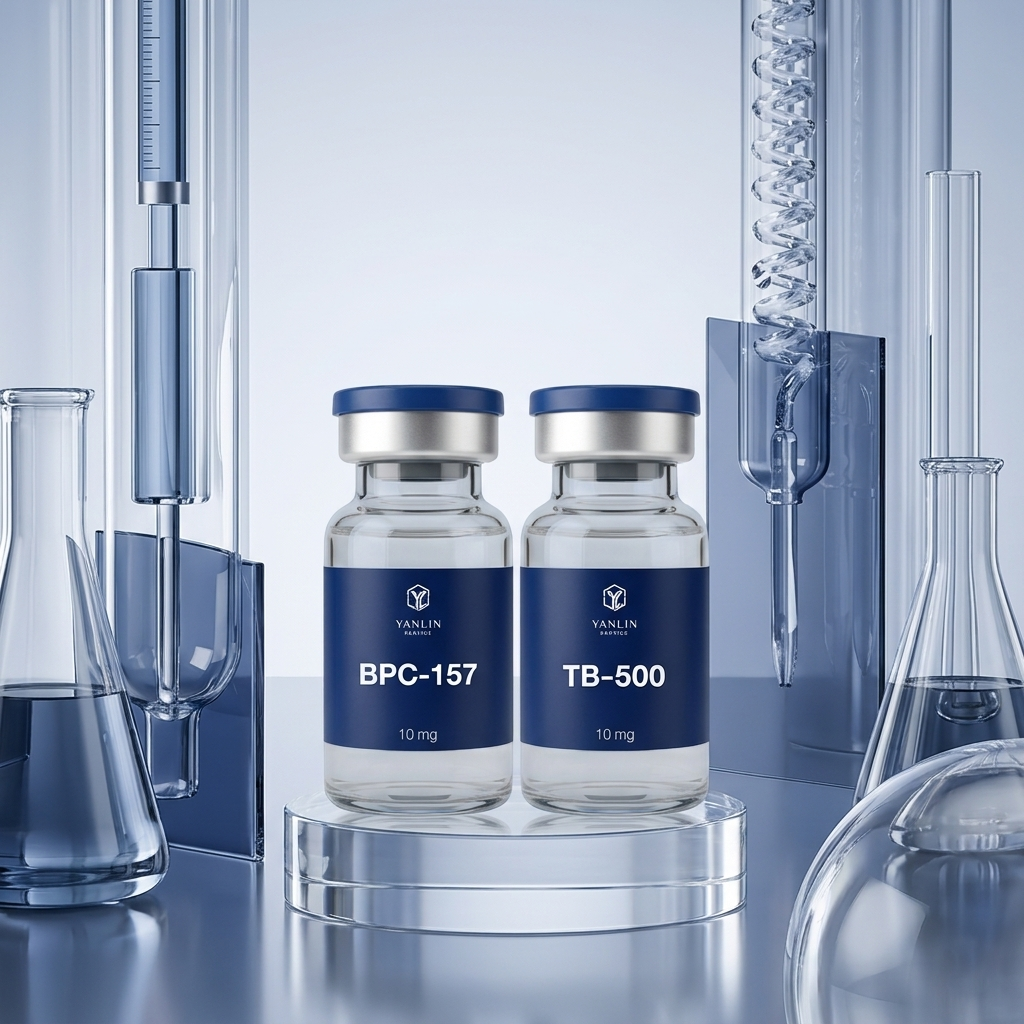
BPC-157 and TB-500 are commonly referenced together because they come up in scientific debates concerning tissue response, repair models, and controlled tests on injured or stressed tissue. Although the two peptide names appear to be closely related due to their similar setting, they have distinct scientific backgrounds. The BPC-157 peptide is commonly discussed in experimental models of tissue protection, angiogenesis, nitric oxide signaling, and injury response, whereas the TB-500 peptide is widely associated with thymosin beta-4-related research including cell migration, wound response, and tissue remodeling. This makes the topic useful as a research peptide comparison, especially as both names appear in the larger category of peptides in tissue research.
The link between BPC-157 and TB-500 begins with the research questions that they are typically linked with. Both terms exist in talks about how tissue systems respond to perturbation, but the scientific processes behind them are not the same. BPC-157 has been examined in regard to tendon, muscle, ligament, wound, gastrointestinal, and other tissue-related experimental models, however much of the evidence is still considered preclinical. TB-500 is commonly mentioned in relation to thymosin beta-4, a peptide researched for its roles in angiogenesis, wound repair, cell migration, and tissue remodeling. The overlap is due to tissue-related interest, rather than a similar mechanism.
Much of the discussion surrounding BPC-157 peptide stems from experimental models that investigate how tissue responds to stress, damage, or disturbance. BPC-157 has been linked to angiogenesis, fibroblast activity, collagen synthesis, nitric oxide modulation, and a variety of tissue repair pathways, which is why it is frequently used in injury response studies. The essential aspect is that BPC-157 should not be reduced to a general “healing” moniker, as this removes the study context. Its significance stems from the way it has been investigated in controlled models involving damaged or stressed tissue, rather than major assertions about real-world results.
The TB-500 peptide subject has a unique research background because it is frequently mentioned along with thymosin beta-4-related study. Thymosin beta-4 has been linked to cell migration, angiogenesis, actin control, wound response, and tissue remodeling, giving TB-500 a more comprehensive movement-and-remodeling relationship. This distinguishes it from the more localized injury-response conceptualization commonly associated with BPC-157. Both compounds arise within peptides in tissue research, however they do not share the same research identity or address the same study topics.
This is where a comparison proves more valuable than a basic side-by-side label. BPC-157 and TB-500 are frequently grouped since they appear in tissue-related research discussions, however the reason for this grouping needs to be addressed more specifically. BPC-157 is frequently associated with experimental protection, repair response, and tissue-system recovery models, whereas TB-500 is more closely tied to thymosin beta-4-related pathways involving cell migration and remodeling. A proper research peptide comparison should demonstrate where their research areas overlap without making the two appear interchangeable.
The broader tissue-research field encompasses a variety of study directions, thus treating any peptide in this area as fulfilling the same job is not appropriate. Some studies focus on vascular reactivity, some on collagen synthesis, some on cell migration, and still others on inflammatory or structural repair mechanisms. BPC-157 peptide and TB-500 peptide are quite similar to each other since they both appear in this larger field, but each is typically associated with a distinct type of study inquiry. That distinction is what offers the comparison of true worth instead of being just another broad peptide overview.
The broader tissue-research field encompasses a variety of study directions, thus treating any peptide in this area as fulfilling the same job is not appropriate. Some studies focus on vascular reactivity, some on collagen synthesis, some on cell migration, and still others on inflammatory or structural repair mechanisms. BPC-157 peptide and TB-500 peptide are quite similar to each other since they both appear in this larger field, but each is typically associated with a distinct type of study inquiry. That distinction is what offers the comparison of true worth instead of being just another broad peptide overview.
Due to the frequency with which the BPC-157 peptide appears in tissue-related experimental models, research on it is frequently discussed. However, that interest must be interpreted carefully. Much of the current discussion around BPC-157 comes from preclinical research and reviews, in which the peptide has been linked to regenerative and cytoprotective effects in controlled settings. This makes it useful within peptides in tissue research, but it should be understood in the context of its investigation as opposed to being provided as a confirmed outcome-based material.
The situation with the TB-500 peptide is unique in that many discussions surrounding it are linked to the larger thymosin beta-4 research background. Thymosin beta-4 has been examined in relation to wound healing, angiogenesis, cell migration, and tissue repair, which is why TB-500 is frequently included in those discussions. However, the wider body of thymosin beta-4 literature should not be interpreted as automatic proof for each simplified claim associated with TB-500. This is where a thorough research peptide comparison comes in handy, as it distinguishes the peptide name from the larger study field it is associated with.
This is why BPC-157 and TB-500 are frequently associated, however they should not be discussed as if they are on the same research path. Both have tissue-related research applications, however BPC-157 is more widely discussed in terms of damage response and protection models, whilst TB-500 is associated with thymosin beta-4-related remodeling and migratory processes. The comparison becomes obvious when the shared category is used as a starting point. From then, the disparities in research background and mechanism become clearer.
Combining the two names might sometimes make the connection appear more relevant than it is. In reality, BPC-157 and TB-500 are frequently discussed together because they are close to each other within peptides in tissue research, and not because they play identical roles. A combination-style debate can be valuable, but only when each peptide’s own context is understood. Without that distinction, the comparison becomes overly broad and loses the subtleties that distinguish each peptide.

When we look at peptides in tissue research more deeply, the distinction between the two becomes clear. The BPC-157 peptide is frequently associated with experimental models of tissue protection, angiogenesis, nitric oxide pathways, collagen response, and injury-related healing settings. The TB-500 peptide is more commonly associated with thymosin beta-4-related research, specifically cell migration, angiogenesis, wound response, and tissue remodeling. Both peptides appear in similar conversations, although they often refer to separate research questions.
This distinction is also why neither peptide should be considered a direct substitute for the other. Although BPC-157 and TB-500 may appear together in searches, product conversations, or tissue-research content, their shared category does not imply that they are similar. BPC-157 is commonly associated with experimental protection and repair-response models, whereas TB-500 is associated with thymosin beta-4-related migration and remodeling studies. A relevant research peptide comparison highlights the contrasts, instead of focusing on combining both names into a single simplistic explanation.
The major takeaway is that BPC-157 and TB-500 share a study area but do not have identical functions. Both exist as peptides in tissue research, although the BPC-157 peptide is often discussed in terms of tissue protection and repair-response models, while the TB-500 peptide is associated with thymosin beta-4-related research on migration, angiogenesis, and remodeling. Understanding this distinction gives the comparison actual meaning. It explains why the two names are frequently discussed together, yet the emphasis remains on study background, product comprehension, and careful interpretatio.
