CJC-1295 and Ipamorelin are frequently mentioned together since they come up in research debates involving growth hormone-related pathways, however they are not the same peptide. Their names frequently appear close together in searches, product discussions, and comparison-based research information, giving the impression that their relationship is simpler than it is. The more effective way to interpret the pairing is to remember that CJC-1295 peptide is typically referred to as a growth hormone-releasing hormone analog, whilst Ipamorelin peptide is typically referred to as a select growth hormone secretagogue. Both contribute to the larger discourse about growth hormone research peptides, but each does so through a different research avenue.
The similarities between CJC-1295 and Ipamorelin begin with their mutual link with growth hormone-related study models. CJC-1295 has been described in published research as a synthetic analog of growth hormone-releasing hormone, whilst Ipamorelin has been described as a growth hormone secretagogue with selective activity in experimental settings. That shared research field explains why the two names are frequently used interchangeably, but the underlying rationale is not that they are synonymous. One is often explored through the GHRH pathway, while the other is discussed through secretagogue-related research, providing a meaningful contrast without lumping the two together. The CJC-1295 peptide side of the comparison is often focused on modification and duration. Since natural growth hormone-releasing hormone has a limited half-life, analogs have been investigated with various activity profiles. CJC-1295 was designed with structural characteristics that allow it to attach to albumin, and studies have shown that it has an extended half-life in the examined setting. That is significant because the dispute surrounding CJC-1295 is not only
about the peptide name, but also about why its altered profile has made it relevant in long-acting GHRH analog research. For readers comparing growth hormone research peptides, this explains why CJC-1295 is frequently given separate attention from shorter-acting materials in the same research area.
Ipamorelin peptide is often discussed from a distinct perspective. Ipamorelin has been described as a pentapeptide having growth hormone-releasing activity and selectivity as a growth hormone secretagogue. This places it in the larger growth hormone-related realm, but not in the same class as a GHRH analog. This distinction is what makes the comparison useful: CJC-1295 and Ipamorelin are similar enough to be discussed together, but distinct enough to need their own explanation. The link is based on research context, rather than the same structure or study role.
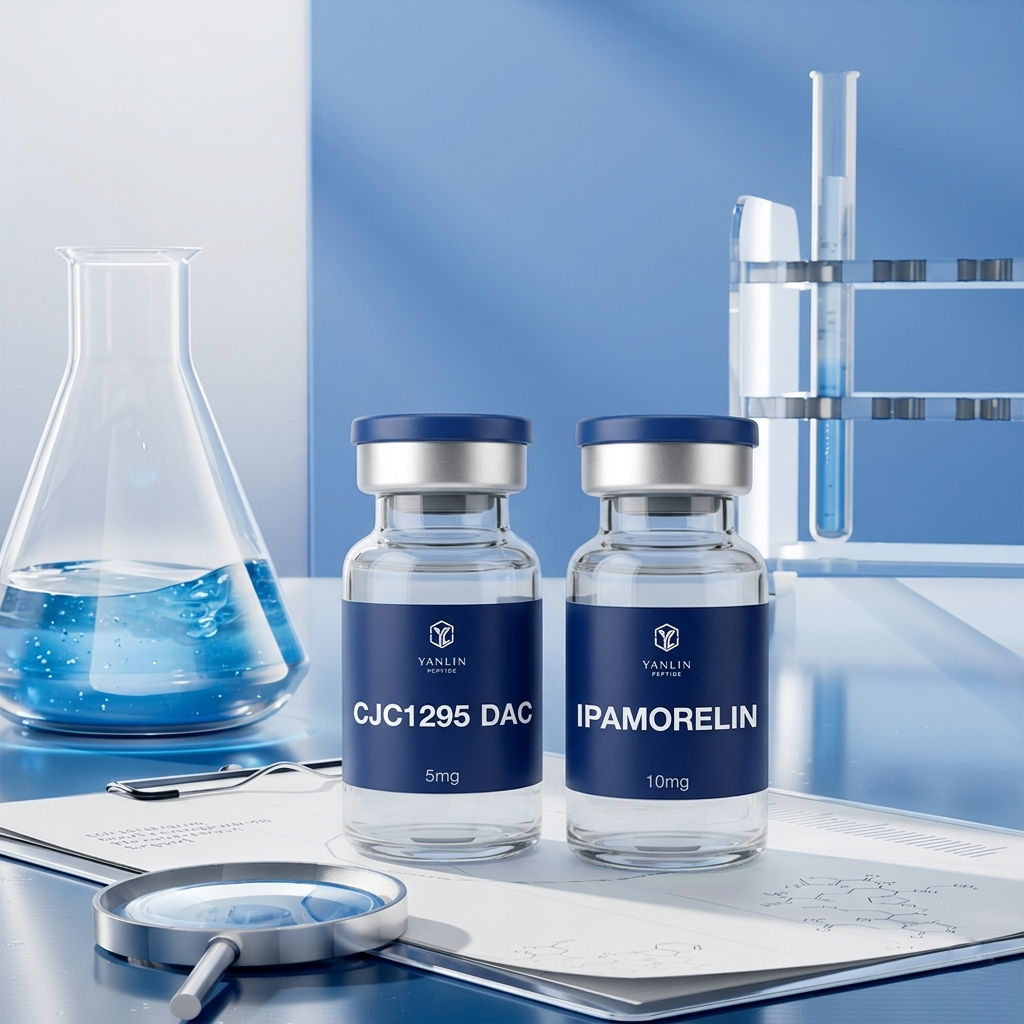
This distinction is also why research peptide combinations might be easily misunderstood. When two peptide names are frequently stated together, readers may believe that the pairing indicates that the two materials perform the same function. In scientific discussions, this is not always the case. A combination or comparison may exist because two materials share connected routes or are widely examined within the same larger topic. With CJC-1295 and Ipamorelin, the pairing makes sense only when each peptide’s separate research identity is still kept clear. The DAC versus NO DAC differential adds another depth to the CJC-1295 peptide debate. A drug affinity complex, or DAC, is connected with the albumin-binding characteristic discovered in CJC-1295 research. When CJC-1295 appears with or without DAC, the phrasing should not be considered a minor designation difference. It indicates that diverse product forms are being explored in research contexts, particularly when readers compare comparable names from the same peptide family. Exact naming is important for growth hormone research peptides since even minor phrasing variations might alter how a material is understood.
CJC-1295 and Ipamorelin continue to be related in numerous conversations for reasons that are both scientific and practical. They both appear in growth hormone-related research conversations, so readers are likely to come across them together. At the same time, the methods used to study them differ enough that a proper explanation cannot simply state that they are both growth hormone-related peptides. A more detailed comparison should first demonstrate what connects them, followed by an explanation of where they differ. This helps
readers comprehend why the two names exist together without perceiving them as duplicates.
Search behavior also has an effect. People frequently search for CJC-1295 and Ipamorelin together since the terms appear in related research and product discussions. This does not imply that the comparison should be simplified to a simple pairing. It means that the two titles have been linked in the way readers research growth hormone research peptides, particularly when attempting to comprehend how various peptide materials are classified. The important
message is that while linked search patterns can hint to a common research subject, they do not eliminate the necessity to analyze each peptide individually. The secretagogue background is essential to explain the Ipamorelin peptide. It has been explored for selective growth hormone release in experimental and clinical research settings, which is why it is frequently found alongside other secretagogue-related compounds. This differs from the GHRH analog frame linked to the CJC-1295 peptide. The distinction helps to avoid a common misunderstanding: two peptides can belong to the same overall research route while being examined using separate mechanisms. That distinction is the primary reason the two names require close comparison.
The same principle applies to exploring research peptide combinations in general. A combination may be explored since the components pertain to related research problems, yet each component retains its own context. The discussion of CJC-1295 and Ipamorelin is divided into two parts: one based on CJC-1295’s GHRH analog profile and the other on Ipamorelin’s secretagogue profile. If those details are ignored, the combination becomes too ambiguous to be useful. A better explanation highlights the shared category while also emphasizing the
separation.
It is also critical to stay within the research context. Both peptides are frequently discussed online in ways that may confuse the distinction between research materials and personal-use claims. Recent reports have raised larger concerns about peptide items marketed online as “research use” while being pushed for civilian use. For a research-focused peptide discussion, it is safer and more accurate to clarify the published context, product naming, and category association rather than turning the content into usage guidance or outcome claims.
The practical benefit of explaining CJC-1295 and Ipamorelin together is that readers will comprehend why related peptide names emerge in the same study space. The CJC-1295 peptide is typically connected with the GHRH analog side of growth hormone research, whereas the Ipamorelin peptide is commonly associated with selective secretagogue research. These two paths can intersect within the broader category of growth hormone research peptides, but they do not combine into a single explanation. This distinction is particularly important when readers are comparing product names, related queries, or investigating peptide combinations.
A clear comparison should leave readers with one key takeaway: CJC-1295 and Ipamorelin are related by research topic, not by material. Their relationship makes sense because both are involved in growth hormone-related peptide research, but each has a unique research background and terminology. Understanding the roles of CJC-1295 peptide, Ipamorelin peptide, growth hormone research peptides, and research peptide combinations allows readers to more accurately grasp why these names are frequently used together. It also keeps the conversation focused on product understanding and research background, which is where these comparisons are often made.
Uncategorized
CJC-1295 and Ipamorelin in Research: Why They Are Often DiscussedTogether
06
May
May
