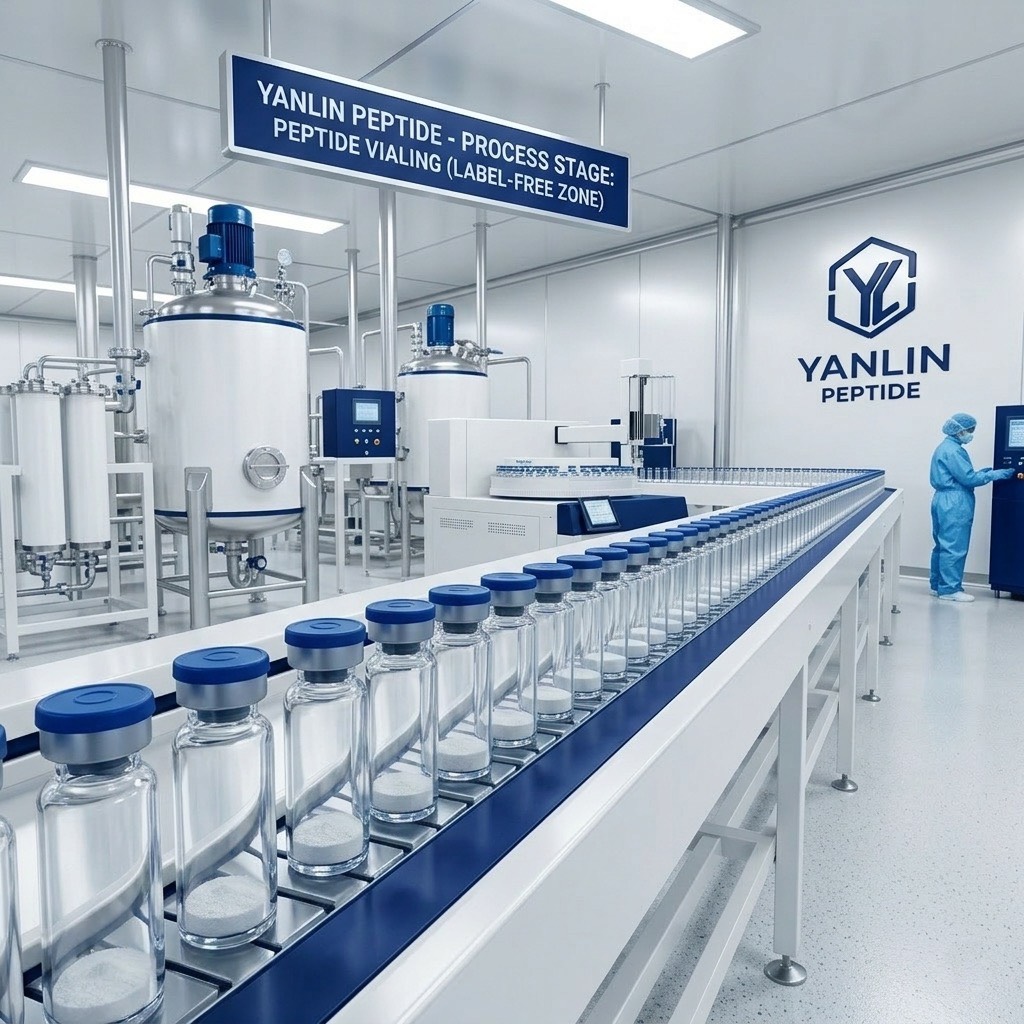

Peptide synthesis quality plays a direct role in influencing the reliability of peptides across industry and research applications. While peptides are often evaluated regarding their structure and their intended usage, the way they are produced can ultimately have direct impacts on their performance across real environments. For sourcing partners and research teams, peptides are not seen as being mere chemical compounds but materials that must behave in a consistent manner in controlled conditions. This makes it crucial to go beyond just defining this product, and taking a better look into how the production process can determine the quality, reliability, reproducibility and long-term usability of the materials.
At the center of it, peptide synthesis looks at the controlled process of creating peptides through adding amino acids to a specific sequence in steps. In doing so, manufacturers are able to create peptides that have defined structures which are capable of being reproduced across multiple batches. Compared to undergoing extraction from natural resources, peptide synthesis posits to be a better alternative due to the high level of control involved, which is essential when working with research peptides across laboratory environments. However, despite the concept of peptide synthesis often being standardized, the execution of the peptide production process varies significantly depending on the methods applied, equipment utilized and technical standards each manufacturer uses.
The differences seen in the peptide production process can have direct impacts on the way peptides perform across real-world applications in research contexts. Even when two peptides appear to share identical specifications, variations in the way they are produced can affect structural stability, solubility and overall performance. In laboratory environments where results rely heavily on repeatability, even minor inconsistencies can introduce variations that impact results. Thus, it’s important for research teams to not only evaluate the final specifications of research peptides, but also understand how the specifications are achieved during the peptide production process. When consistency is adhered to throughout the entire peptide synthesis process, it becomes easier to ensure that peptides behave predictably across different experimental conditions. Inconsistent results frequently necessitate additional verification stages, which can lengthen deadlines and raise overall resource utilization within research operations. Over time, this can have an impact on how effectively tests are carried out, especially in settings where controlled conditions are expected to remain constant.

Peptide manufacturing standards also play an equally important role in ensuring that reliability is maintained across batches. The level of control applied during synthesis, including seeing how each amino acid is added and how reactions are monitored can determine if the final product aligns with expected quality. Differences in production protocols, quality checks and overall process control can lead to variations that may not always be immediately noticeable but can still affect performance. Due to this, manufacturers are required to maintain stringent control measures over the entire peptide synthesis process, ensuring that they are capable of producing peptides that remain consistent over time. For sourcing partners, this means carefully evaluating how peptides are manufactured, and not solely focusing on reviewing the final product specifications. This includes investigating how consistently manufacturing standards are applied throughout multiple batches, rather than relying on isolated results. It is also necessary to understand whether quality control is maintained throughout the process or is limited to the end stage
Another aspect that is often overlooked during the peptide production process is how tightly each stage of synthesis is controlled during execution. While the overall peptide synthesis process may be standardized, factors like reaction timing, sequence accuracy and monitoring conditions can have significant influences on the final structure of the peptide. Even small changes during these stages can lead to inconsistencies arising and affect how peptides behave in real-contexts, especially when they are used repeatedly under the same experimental conditions. Due to this, production is therefore not simply about sticking to a defined method but also about how consistently that method is carried out across different batches. Closely associated with this is the role of technical capabilities within peptide manufacturing as experience and control applied during the production process can determine how effectively these processes are maintained without variations being introduced. In fact, maintaining this level of control necessitates continual monitoring at each stage, rather than depending solely on final inspections. Variations that appear early in the process can persist into subsequent stages, making them more difficult to recognize and rectify. As a result, consistency is accomplished not only through clearly defined procedures, but also through the active management of those procedures during execution.
When evaluating how the peptide synthesis process performs beyond controlled, smaller-scale production, it is also crucial to look at scalability. Producing peptides under tightly monitored conditions at a limited scale does not always reflect how effectively those same standards are maintained when production volumes increase. As demand continues to grow, it is crucial to maintain uniformity across larger batches. This sometimes can be challenging to do especially if the process control is not consistently applied throughout each stage. This is where variations in manufacturing can occur, as not all processes have been designed to sustain the same level of precision when scaling. For research teams working with research peptides, this can have direct influences on whether the materials can continue to behave consistently across different usage phases. In such instances, even slight anomalies created during scaling might accumulate over time, making long-term stability and predictability more challenging.
When these elements are analyzed together, it becomes apparent how peptide synthesis affects overall reliability beyond what is stated in specifications. The capacity to maintain consistency across scale, assure controlled execution during production, and manage variability throughout the process all influence how peptides operate in real-world applications. This means that evaluating peptides should require more than just reviewing technical data; it should also include understanding how those results are achieved and maintained over time. This approach enables better informed material selection decisions, especially in contexts that require repeatability and controlled outcomes. As a result, looking at the entire manufacturing process provides a fuller picture of whether peptides are appropriate for consistent use in research and industry contexts.